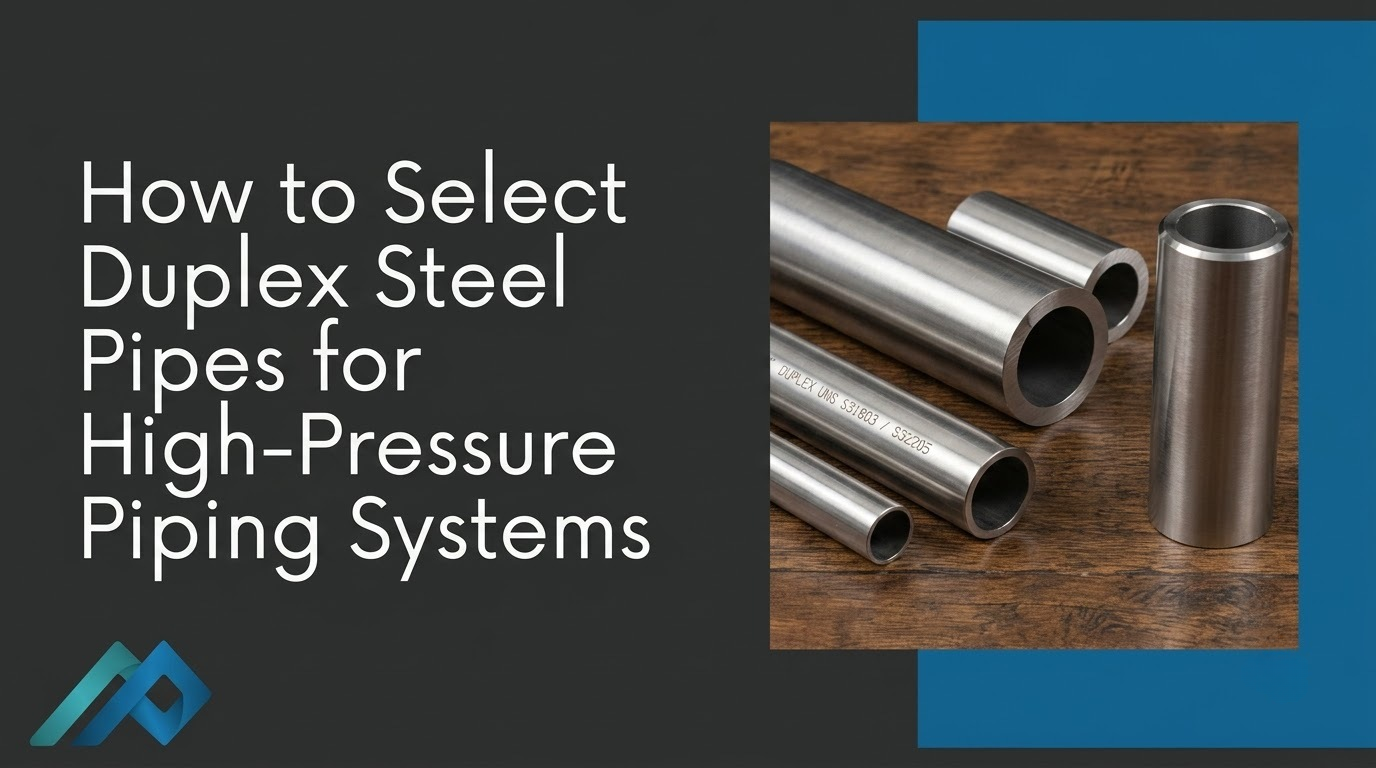
Why Duplex Steel Pipes Are Considered for High-Pressure Systems
High-pressure piping systems demand stricter material selection than standard process lines, making duplex steel pipes a key solution. The dual microstructure of austenite and ferrite gives duplex stainless steel higher mechanical strength than common austenitic grades, with resistance to chloride-induced stress corrosion cracking. Engineers reviewing Duplex Steel Pipes for service lines weigh this strength-to-corrosion balance against the specific pressure, temperature and chemical conditions of the system. That balance decides whether duplex stainless steel pipes suit a given application. Palgotta Metal supplies duplex pipes across standard and higher-alloyed grades.
Key Factors When Selecting Duplex Steel Pipes
Selecting the right duplex grade for a high-pressure system means evaluating several interdependent factors together, since no single specification decides suitability by itself, especially under sustained load.
Pressure Rating and Wall Thickness
Pipe pressure capability comes from design pressure, temperature, pipe diameter, wall thickness and the applicable piping design code acting together.
Duplex Grade Selection
Duplex stainless steel pipe options span multiple grades, and the correct choice depends on the service environment and design requirements rather than the general term deciding suitability alone.
Corrosion and Service Environment
Chloride exposure, seawater contact, chemical media and elevated temperature all influence which duplex grade resists corrosion, since resistance depends on the specific alloy rather than the word duplex alone.
Temperature and Toughness Requirements
Operating and design temperatures must be checked alongside pressure and corrosion conditions, since the toughness and mechanical properties of duplex stainless steel shift across different temperature ranges in service.
Manufacturing, Welding, and Fabrication
Seamless and welded construction each suits different high-pressure applications, and welding procedures, heat input control and fabrication practices affect the final mechanical and corrosion performance of the pipe.
Duplex vs Super Duplex Pipes for High-Pressure Service
Choosing between standard duplex and super duplex steel pipes depends on actual service conditions rather than a general preference, since alloy content changes corrosion resistance, strength, and cost together.
| Factor | Duplex Steel Pipes | Super Duplex Steel Pipes |
| Alloying level | Moderate chromium, molybdenum, and nitrogen content, typically grade 2205 | Higher chromium, molybdenum, and nitrogen content, typically grade 2507 |
| Corrosion environment | Suited to moderately corrosive processes and marine-adjacent conditions | Suited to aggressive chloride and sour service environments |
| Chloride resistance | Adequate for many industrial and offshore applications | Higher pitting resistance for severe chloride exposure |
| Strength | Higher yield strength than standard austenitic stainless steel | Higher yield strength than standard duplex grades |
| Typical service | Process piping, general offshore and chemical plant use | Subsea, high-chloride, and sour service piping |
| Cost considerations | Lower alloy cost than super duplex | Higher material and fabrication costs due to alloy content |
Standards and Documentation to Verify
Confirming the following documentation prevents costly mismatches between the ordered duplex steel piping and the actual project requirements before fabrication or installation begins on site.
- Confirm the exact duplex grade specified, since designations such as 2205 and 2507 carry different mechanical and corrosion properties.
- Verify the applicable ASTM or ASME specification, or the project specification governing the pipe order.
- Check the pipe outside diameter, wall thickness and schedule against the piping design requirements before ordering.
- Establish whether the project requires duplex steel seamless pipes or duplex steel welded pipes for the application.
- Review mechanical requirements, including tensile strength, yield strength, and elongation values stated in the specification.
- Confirm corrosion related requirements, such as pitting resistance testing, where the service environment demands it.
- Verify inspection and testing requirements, including radiography, ultrasonic testing, or hydrostatic testing as specified.
- Request the Material Test Certificate for every batch to confirm compliance with the ordered specification.
Duplex Steel Pipe Selection Checklist
Field engineers use this 8-step verification process to prevent costly piping failures in high-pressure installations. Reviewing pressure limits, corrosion factors, and material certificates beforehand eliminates grade mismatches prior to fabrication.
- Determine design pressure and temperature.
- Identify the service medium.
- Evaluate corrosion exposure.
- Select the appropriate duplex grade.
- Determine pipe diameter and wall thickness.
- Confirm seamless or welded construction requirements.
- Review fabrication and welding requirements.
- Verify applicable standards and inspection documentation.
Conclusion
The selection of duplex steel pipes for high pressure service is a matter of matching design pressure, temperature, corrosion environment and grade against verified standards and documentation. Duplex Steel Pipes are only valuable when these factors are in line with actual project conditions. Check each specification against the project requirements before placing an order.